Skip to project content

HERMS

An enterprise hotel equipment rental management system designed to prevent inventory shrinkage, reconcile multi-stage returns, and protect billing accuracy across commercial hospitality rentals.

Role
Full-stack architecture and development
Category
Rental operations platform
Timeline
August 2026 – September 2026
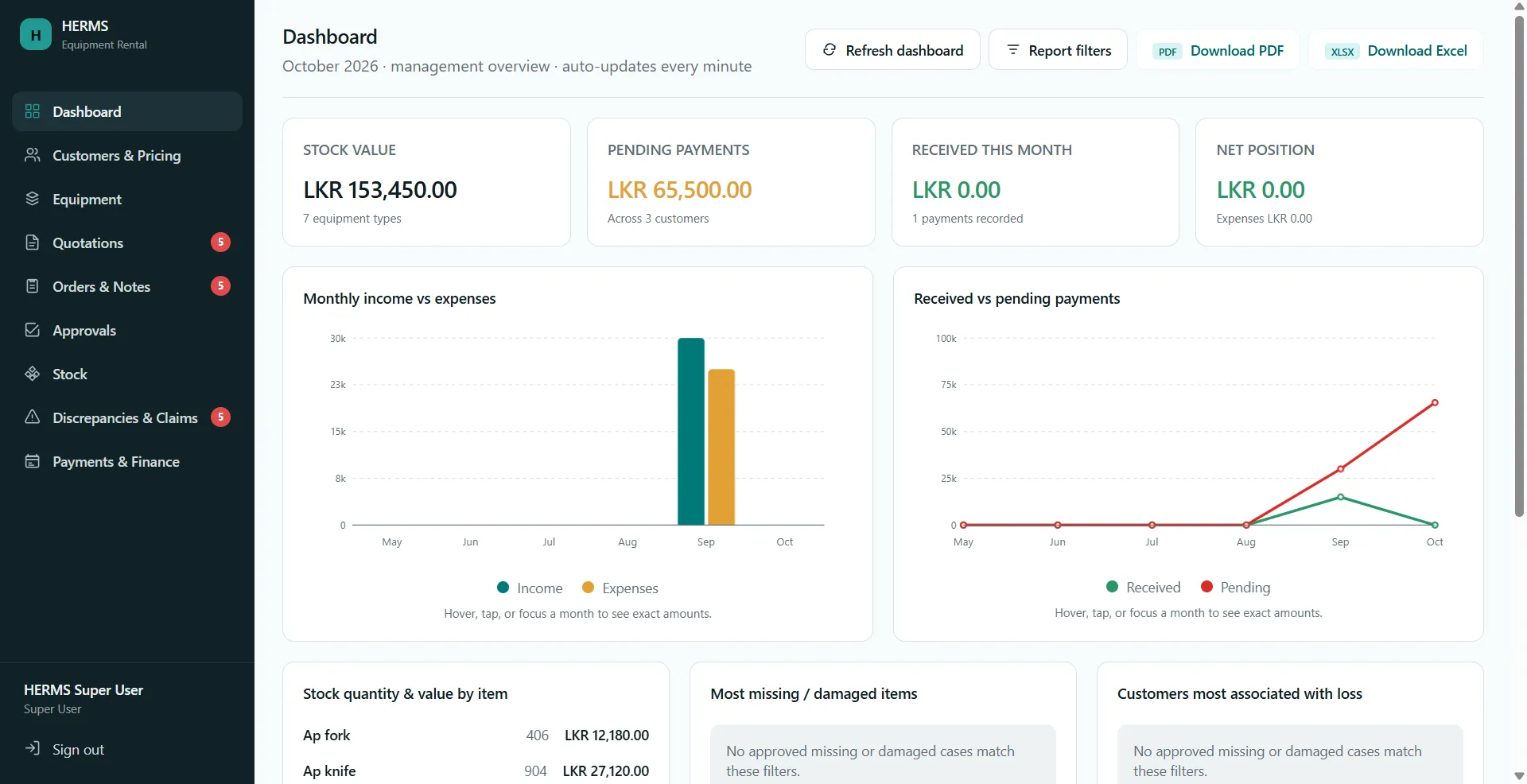
HERMS management dashboard
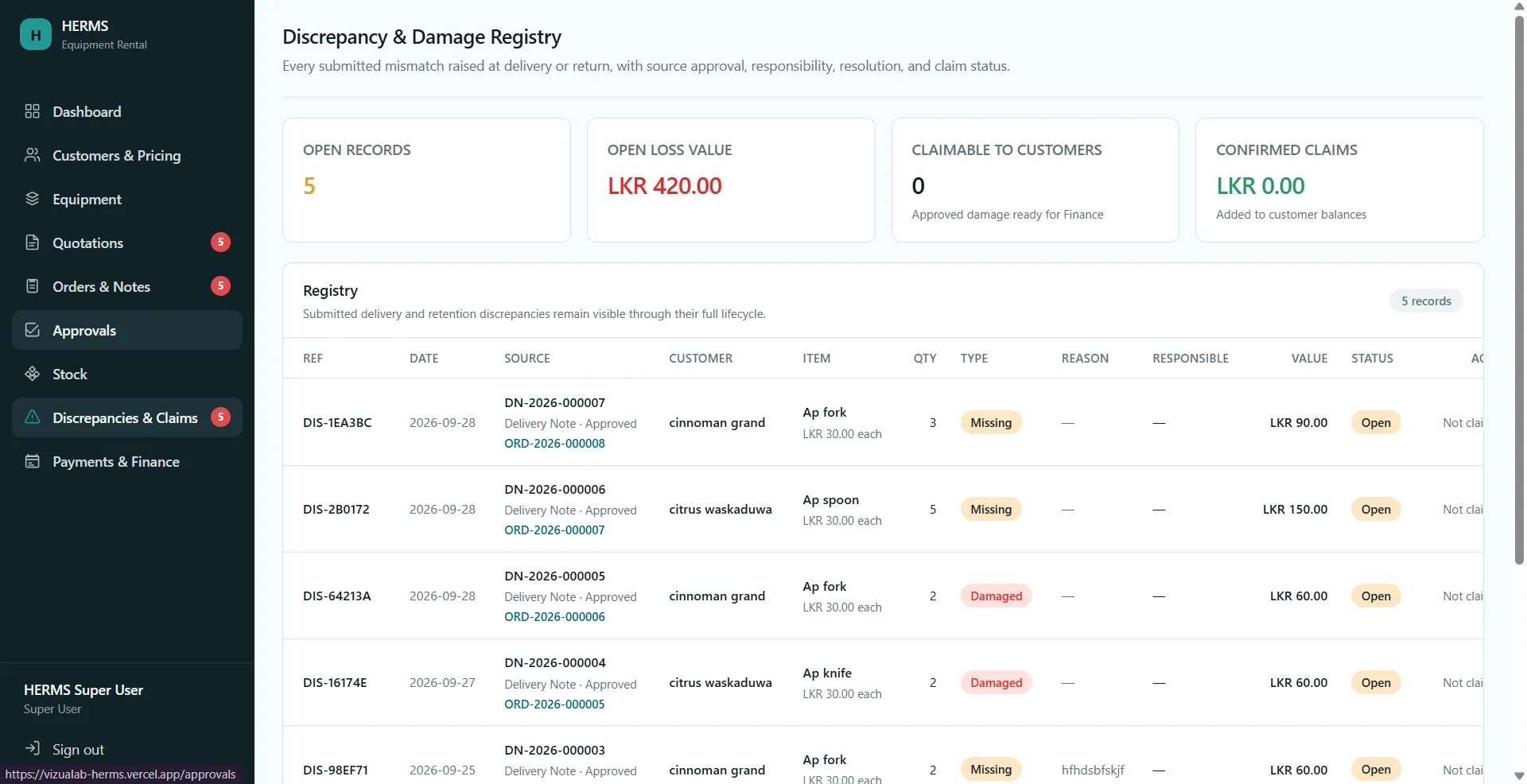
HERMS discrepancy and damage registry
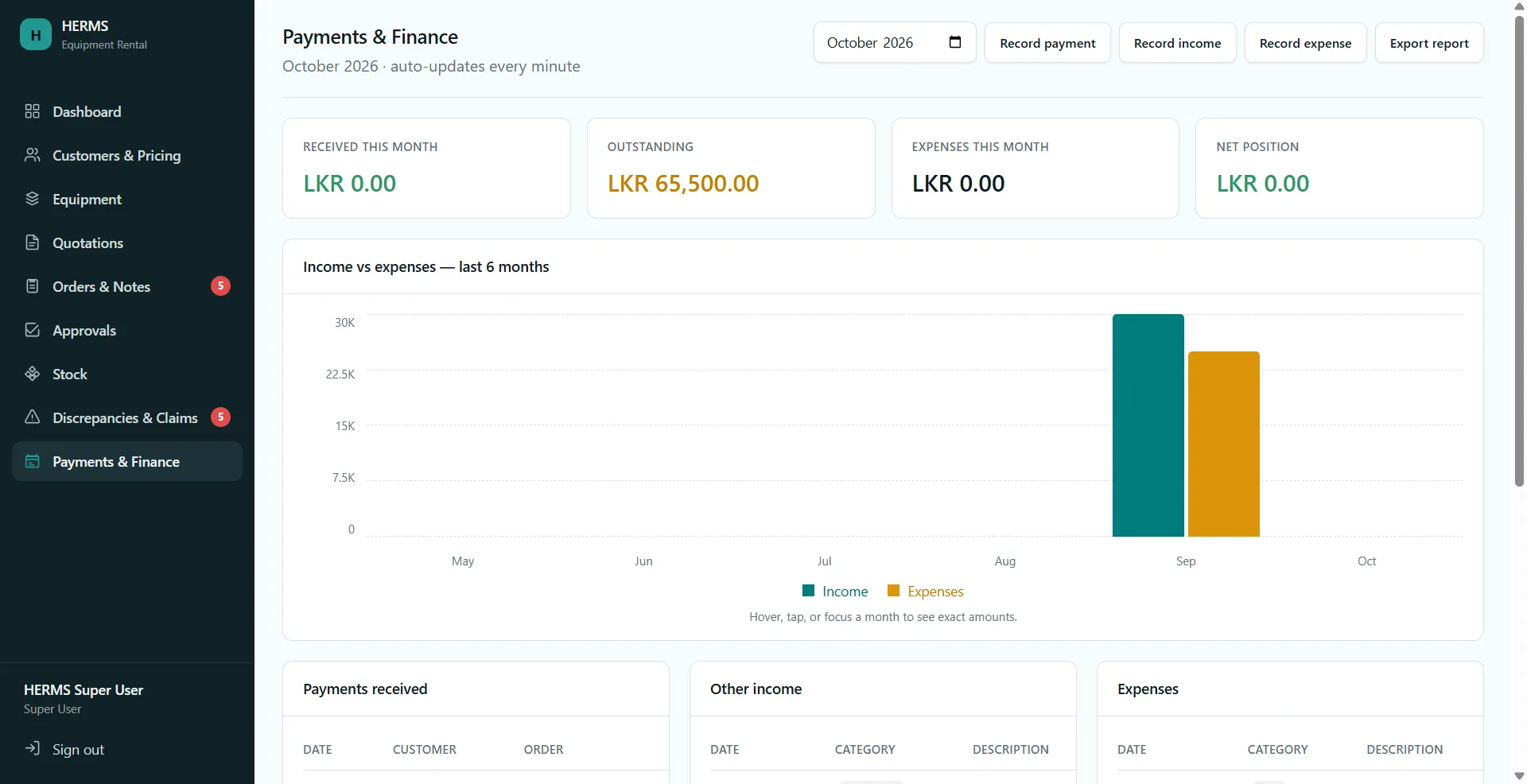
HERMS payments and finance dashboard

Project overview

01

The challenge

Commercial hospitality rentals move equipment through quotations, dispatches, staged returns, inspections, claims, and payments. HERMS needed to connect those operations without allowing field submissions, pricing changes, or incomplete returns to create silent stock and billing discrepancies.
02

The outcome

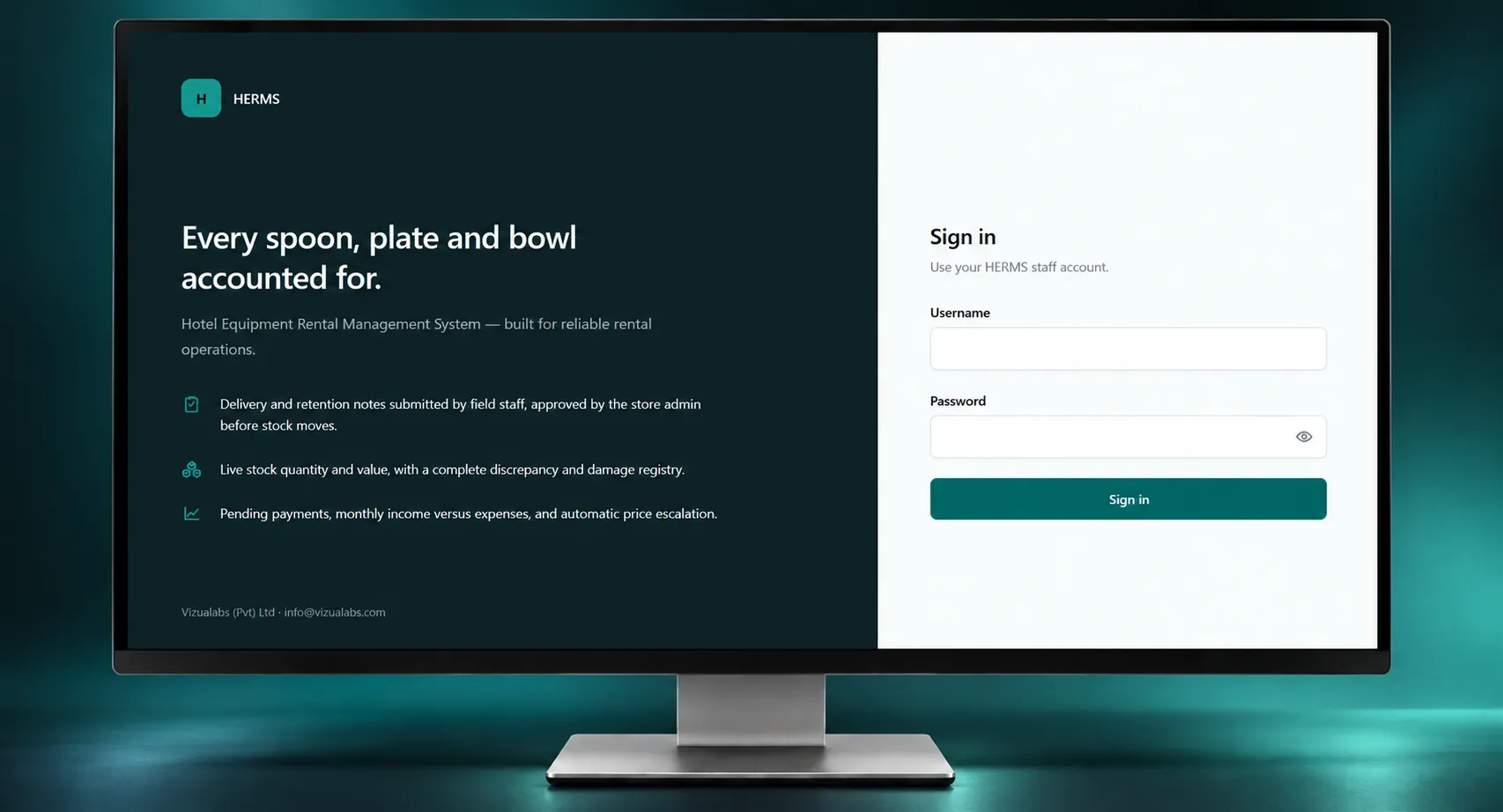
HERMS delivers an auditable operational system in which stock movements require verified physical counts, returns reconcile against delivered quantities, historical prices remain immutable, and management can monitor utilization, revenue, approvals, claims, and ledger activity in real time.

Deliverables

  1. 01Quotation-to-order workflow with locked line pricing
  2. 02Approval-led inventory and return reconciliation
  3. 03Passwordless field dispatch and checklists
  4. 04Claims, finance, and automated price escalation
  5. 05Executive dashboard and exportable audit logs

Project access

Technical details

Commercial workflow

The quotation-to-order workflow supports both catalogue pricing and authorized custom overrides. Once confirmed, every line price is locked so later catalogue changes cannot alter the value of an existing contract or historical invoice.

Inventory control and reconciliation

Field submissions never change stock directly. A Store Admin must verify physical counts before an atomic database transaction records the movement. Multi-stage returns remain open until returned, outstanding, missing, and damaged quantities reconcile exactly with the quantity originally delivered.

Secure field and financial operations

Field crews can complete scoped checklists through expiring SHA-256 link tokens without signing in, reducing dispatch friction while limiting access. Damage claims use immutable price history from the recorded date of loss, and every monetary calculation is performed in integer cents before Finance verification.

Architecture and data integrity

The full-stack monorepo uses Bun workspaces, TanStack Start with React, Hono.js, and Drizzle ORM. Hono runs on AWS Lambda Function URLs behind a same-origin Nginx proxy, while the Neon PostgreSQL HTTP driver avoids connection-pool exhaustion and database triggers prevent changes to audit and stock ledgers.

Automation and reporting

An idempotent semi-annual scheduler applies ten-percent price escalations without changing historical invoices. The executive dashboard brings asset utilization, revenue, pending approvals, discrepancies, and exportable audit records into one real-time operational view.

Tech stack

  • TypeScript
  • React
  • TanStack
  • Hono.js
  • Bun
  • AWS Lambda
  • PostgreSQL
  • Neon
  • Drizzle ORM
  • Tailwind CSS

Final thoughts

HERMS demonstrates how strict business rules can be translated into a practical interface without weakening operational controls. The project treats inventory, pricing, claims, and audit history as connected financial records, creating a system that remains reliable as equipment moves between warehouse staff, field crews, customers, and Finance.

What I learned

  1. 01

    I learned to model multi-stage rental returns around explicit reconciliation invariants rather than relying on loosely connected status updates.

  2. 02

    I strengthened my approach to secure passwordless workflows by combining narrow permissions, expiring tokens, and approval boundaries.

  3. 03

    I gained deeper experience with serverless database access, immutable ledgers, idempotent schedulers, and precise financial calculations.