Skip to project content

Dine-Mate POS

A full-stack point-of-sale and management platform built under Vizualabs to connect restaurant and retail operations, from order processing and inventory to staff, accounting, customer relationships, and multi-branch oversight.

Role
Full-stack development and hybrid systems architecture
Category
Restaurant and retail management system
Timeline
November 2025 – June 2026
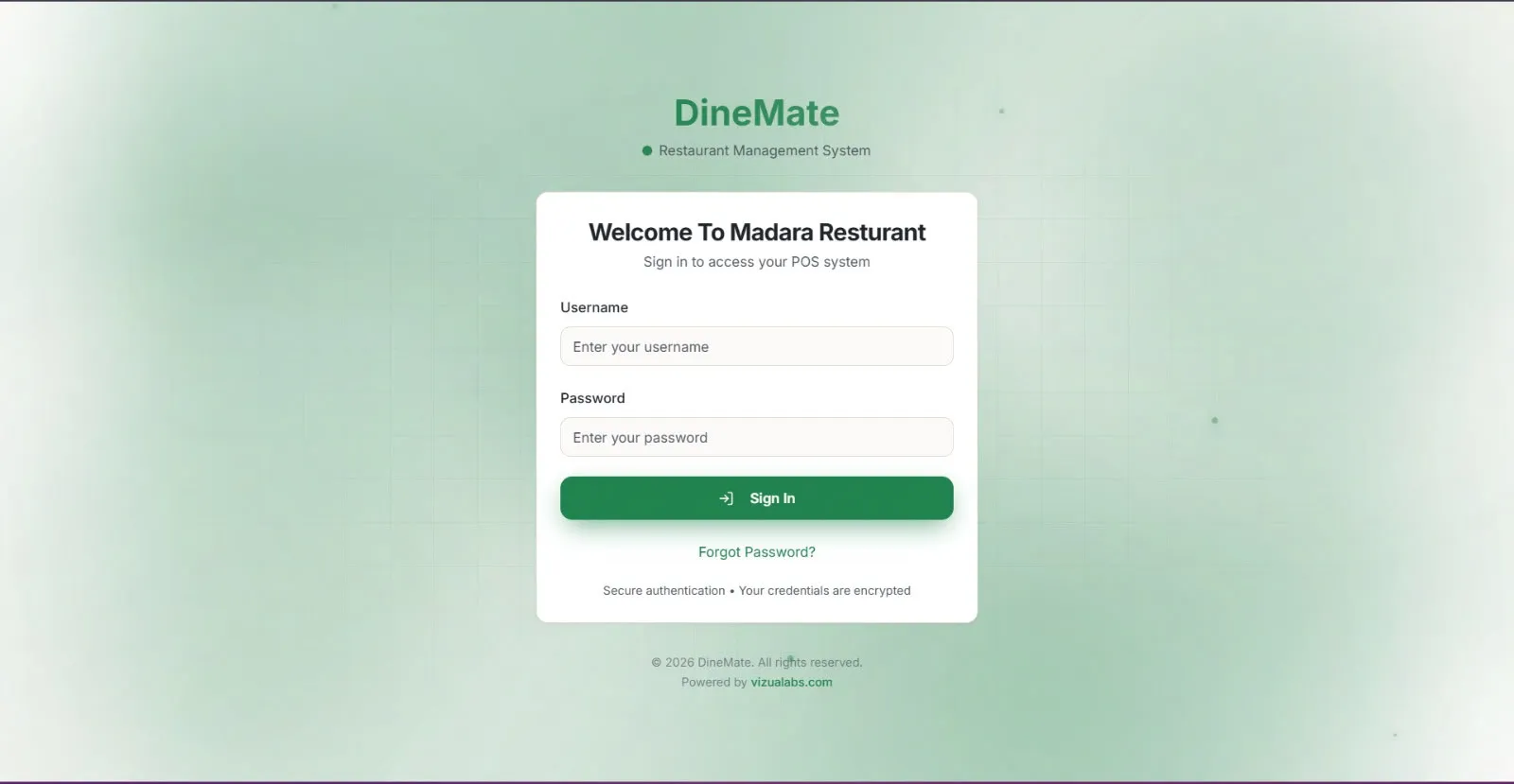
DineMate restaurant management sign-in page
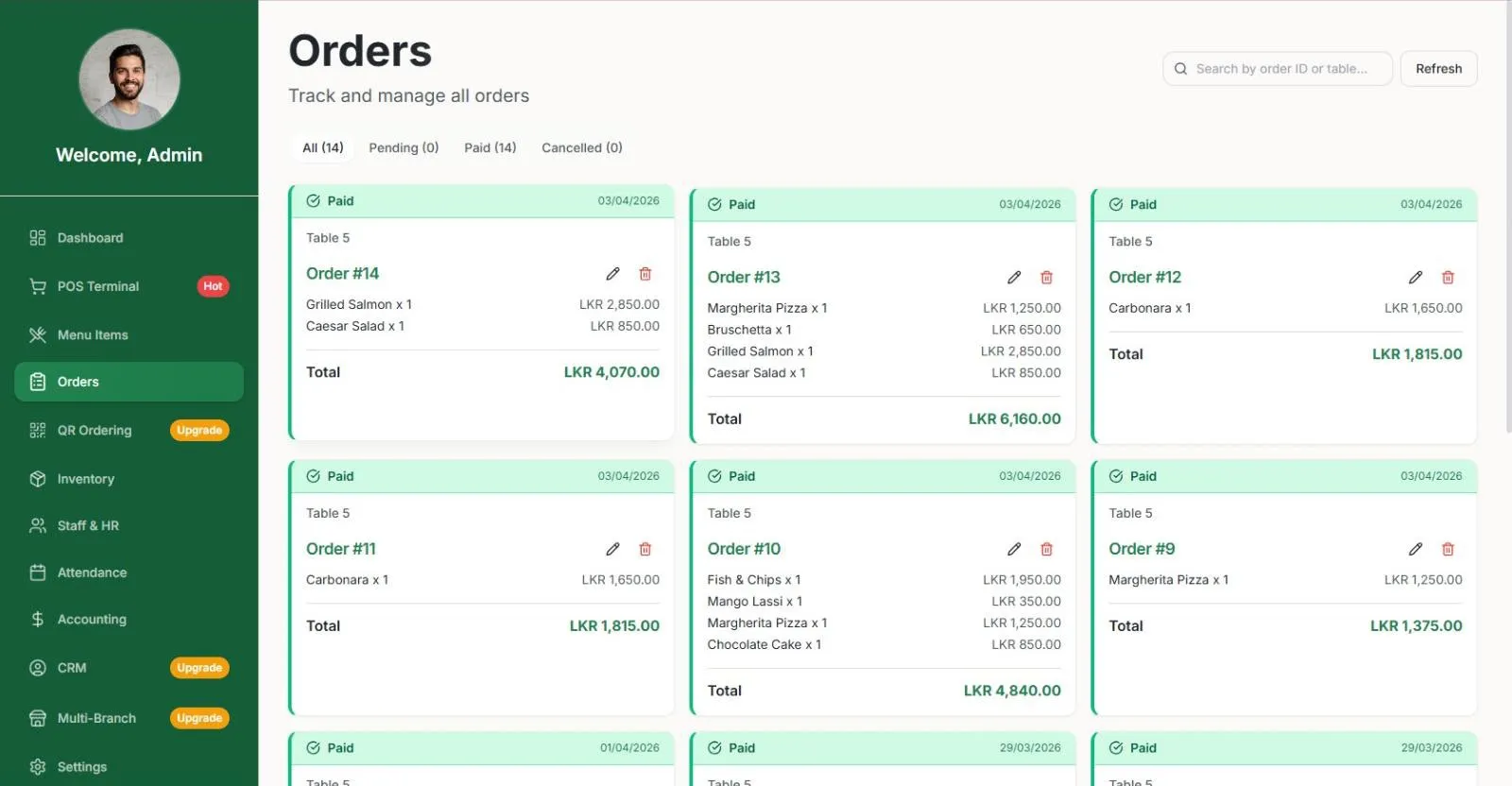
DineMate order management dashboard
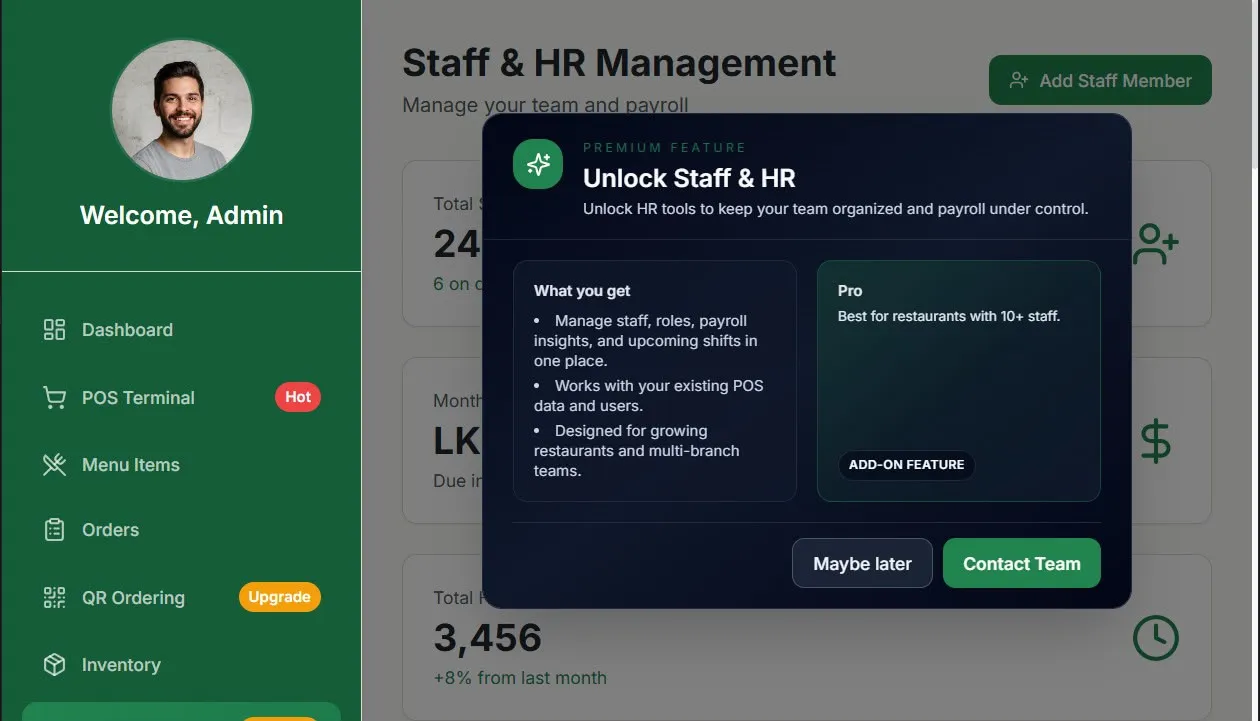
DineMate Staff and HR management interface

Project overview

01

The challenge

Dine-Mate needed to bring a broad set of restaurant and retail workflows into one consistent interface while connecting a cloud-deployed application to location-specific hardware. The system had to remain clear for daily staff use, scalable across branches, and dependable when producing receipts through local thermal printers.
02

The outcome

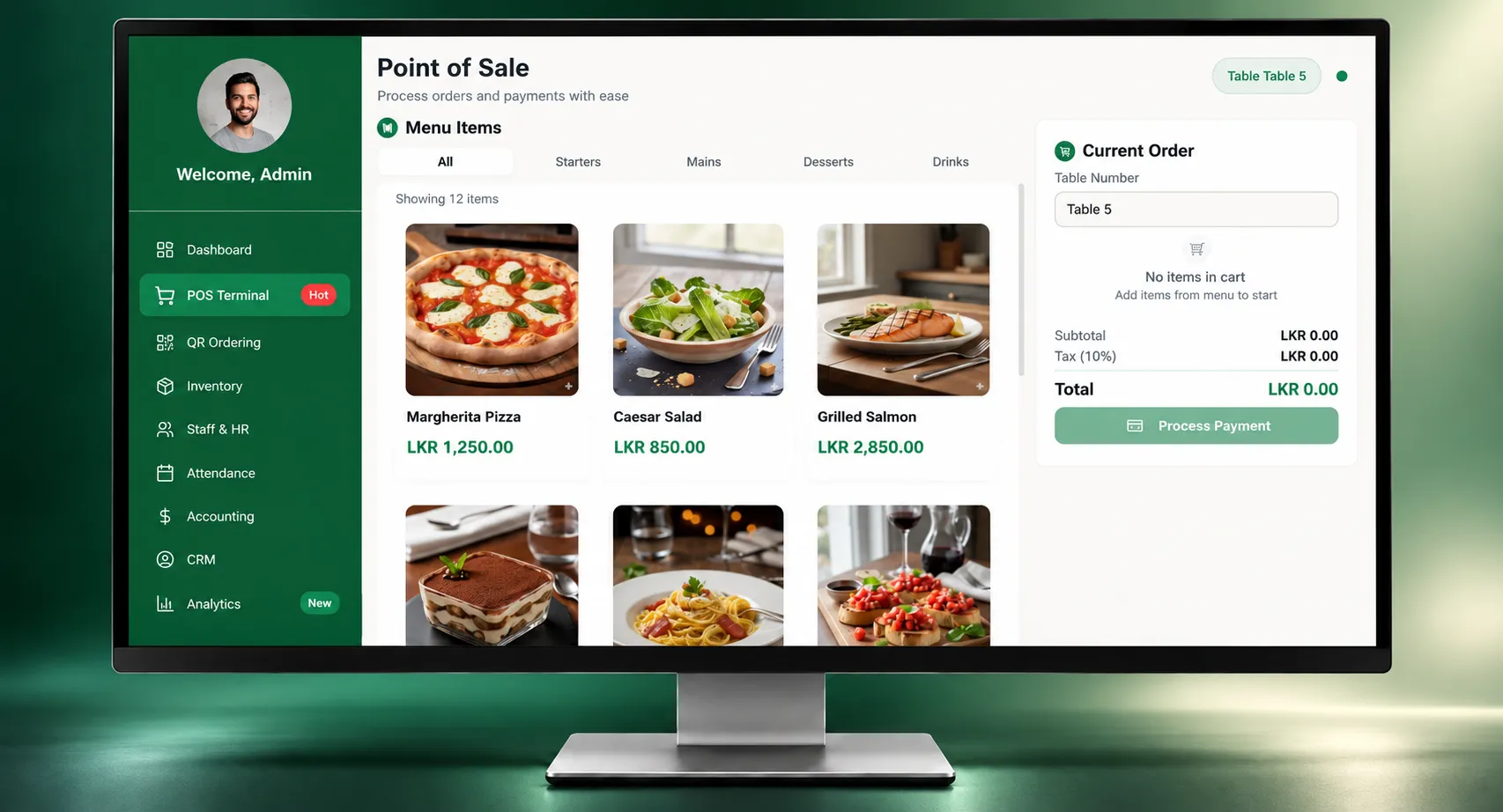
The resulting platform delivers a unified operational workspace with point-of-sale, analytics, stock control, workforce management, accounting, CRM, QR ordering, and multi-branch capabilities, supported by a hybrid desktop and backend architecture for reliable in-store printing.

Deliverables

  1. 01Point-of-sale terminal and order processing
  2. 02Inventory, staff, attendance, accounting, and CRM modules
  3. 03Multi-branch operations and QR digital menu
  4. 04Transactional HTML email system
  5. 05LAN thermal printer integration

Project access

Technical details

Operational platform

Dine-Mate is a full-stack point-of-sale and management system developed under Vizualabs for restaurant and retail teams. It centralizes order processing, operational reporting, stock control, workforce workflows, customer relationships, and branch administration within one product.

Frontend architecture

The frontend uses React 18, TypeScript, and Vite 5, with Tailwind CSS and shadcn/ui components built on Radix primitives. React Router DOM manages page navigation, while a dedicated API data layer coordinates fetching, caching, and server-state synchronization across the application.

Management workflows and analytics

A shared component system, reusable layout shell, and page-level routes support the POS terminal, analytics dashboard, inventory, staff and attendance tracking, accounting, CRM, multi-branch operations, and QR-based digital menu. Recharts powers data visualization, while date-fns provides consistent date handling throughout the interface.

Spring Boot backend and communication

The Java and Spring Boot backend handles core point-of-sale logic and entity persistence through Lombok-based models. It also delivers transactional communication using Thymeleaf-rendered HTML emails, Gmail SMTP, custom MIME composition, and branded message templates.

Hybrid printing architecture

A hybrid ElectronJS and Spring Boot architecture bridges the cloud-hosted platform with restaurant hardware. Deployed on AWS Lightsail, the solution enables LAN-based thermal printer access for reliable in-store receipt printing without limiting the broader application to a local-only environment.

Tech stack

  • React
  • TypeScript
  • Vite
  • React Router
  • Tailwind CSS
  • shadcn/ui
  • Spring Boot
  • Electron
  • Docker
  • AWS Lightsail

Final thoughts

Dine-Mate demonstrated that a modern web platform can support both broad operational workflows and physical in-store infrastructure. Its strongest architectural decision was separating the scalable cloud experience from location-specific hardware access while keeping both parts connected through one dependable product workflow.

What I learned

  1. 01

    How to organize a large operational surface into reusable components, consistent navigation, and focused role-based workflows.

  2. 02

    How structured API data handling, charts, and date utilities can keep data-heavy business interfaces responsive and understandable.

  3. 03

    How to connect cloud-hosted services with LAN hardware through a hybrid Electron and Spring Boot architecture.